BEHIND 1874
A History That Keeps Moving
From a coffee plantation established in 1874 to a living heritage destination today, De Karanganjar has journeyed through generations of change, adapting to the times while remaining rooted in the same landscape. Its story has been shaped by the people who cultivated its coffee, preserved its heritage, and carried its legacy from one generation to the next.
Today, that long history continues to evolve, inviting visitors to experience the stories, culture, and traditions that have grown from this remarkable place.
1874–1942
The Early Years

It is said that the kantoor building at De Karanganjar was the first building to be constructed.
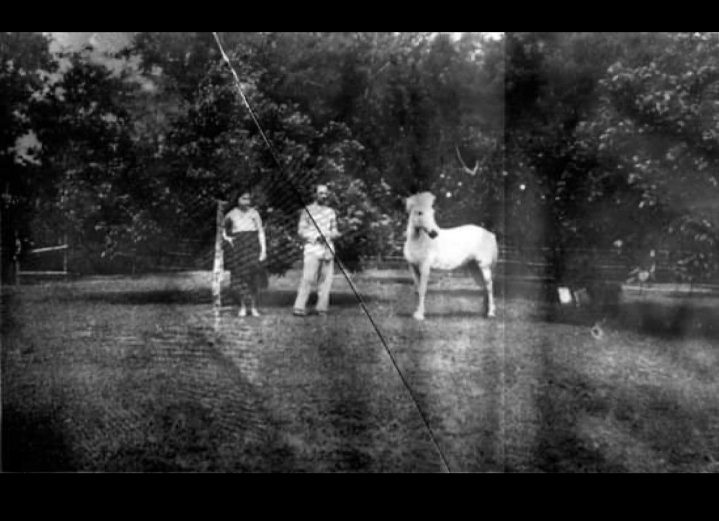
Paul Schaaf and his wife, Painem, a local woman from Modangan Village.
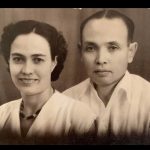
Robert Schaaf, born at De Karanganjar, pictured with his wife, Anna Lucardie.
De Karanganjar Koffieplantage was established in 1874 by Hendrik Jan Velsink and Hendrik van Vredenbergh, and was later managed by NV Cultuur Maatschappij Karanganjar. The plantation was established as a coffee estate on the slopes of Mount Kelud, and became part of the long history of coffee cultivation in the region. While Velsink and van Vredenbergh are recorded as the founders of the plantation, further information about their personal lives and residence during this period remains limited.
Paul Constant Schaaf managed the De Karanganjar plantation from 1882 to 1942, making him one of its longest-serving managers. He married Painem, a local woman, and they had two sons, Robert and Emile, both born at De Karanganjar.
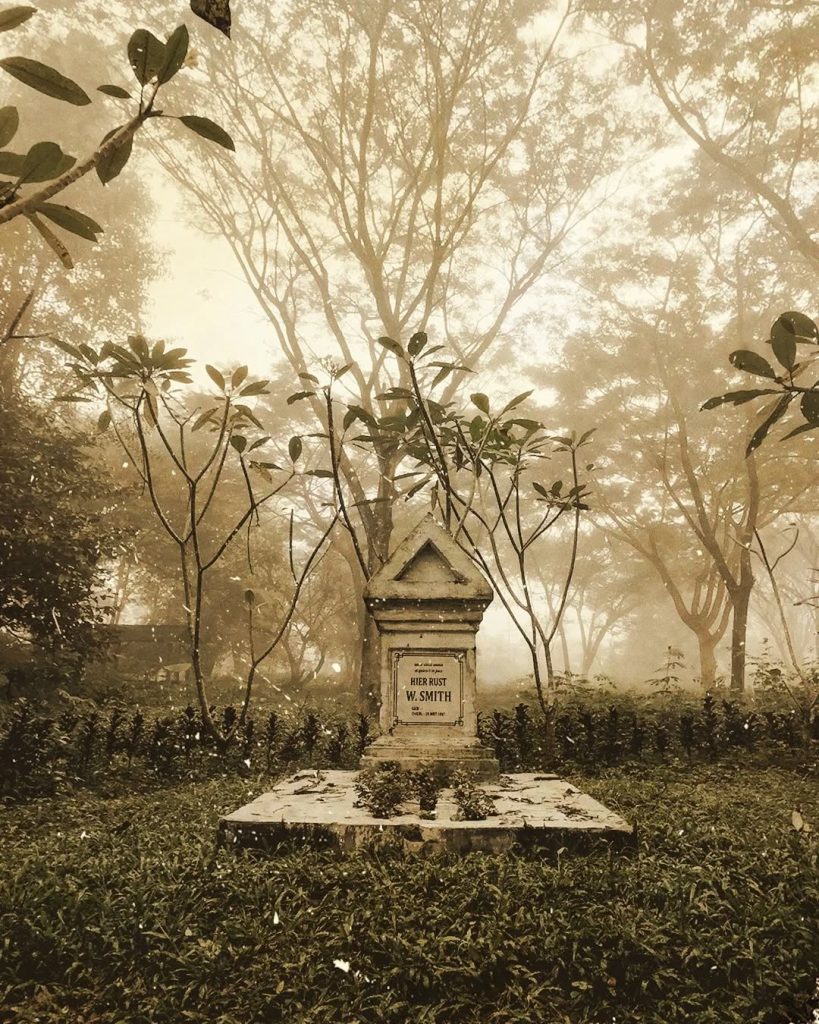
The grave of W. Smith, which can still be found today in the Vredestuin area.
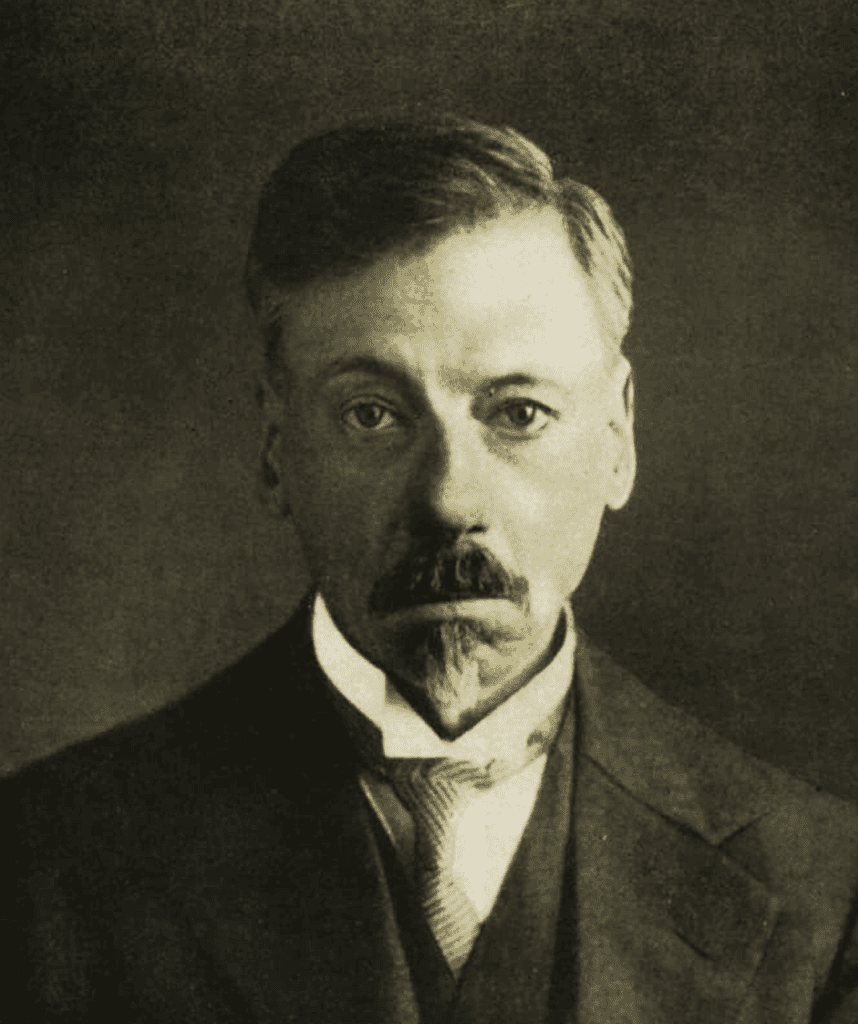
J. J. Smith Jr., a botanist who was also an initiator of the establishment of the Botanical Gardens in Bogor and Blitar.
Among the other people associated with the plantation was Willem Smith, whose grave remains at De Karanganjar. He is believed to have been an official of NV Cultuur Maatschappij Karanganjar. Willem was reportedly the brother of J. J. Smith Jr, a Dutch botanist who served as director and curator of the Botanical Gardens in Bogor. Both Willem and J. J. Smith Jr. were sons of Johannes Jacobus Smith, who served as head of the Amsterdam Post Office and was also a member of the Order of the Dutch Lion.
1942–1945
The Japanese Occupation
In 1942, the arrival of the Japanese brought plantation activities to a halt. Paul Constant Schaaf, one of the plantation’s managers, remained at Karanganjar when the Japanese arrived. According to his descendant, Mark Wennberg, Paul was taken by the Japanese and died in a prison in Lawang in 1945.
1945–1957
A Period of Transition
After Indonesia’s independence, De Karanganjar gradually resumed operations. The plantation was briefly managed by NV Kooy & Voorhout, followed by the government Plantation Service, before foreign-owned companies were nationalized in 1957.
1957–1963
Nationalization and PT Harta Mulia
In 1957, the Indonesian government began nationalizing Dutch-owned companies under President Sukarno.
Following the nationalization, Denny Roeshadi, who had previously worked at De Karanganjar and had held the highest-ranking position in the plantation’s Dutch management, took over the management of the plantation.
Denny was not only an experienced plantation official. During the Indonesian War of Independence, he had also taken up arms as a militia member and was active in the PNI (Partai Nasional Indonesia). These experiences and his position at De Karanganjar may have been among the considerations behind the decision to entrust the management of the plantation to him.
In 1960, Denny established PT Harta and obtained a cultivation right (HGU) to manage the plantation. In 1963, PT Harta was renamed PT Harta Mulia.
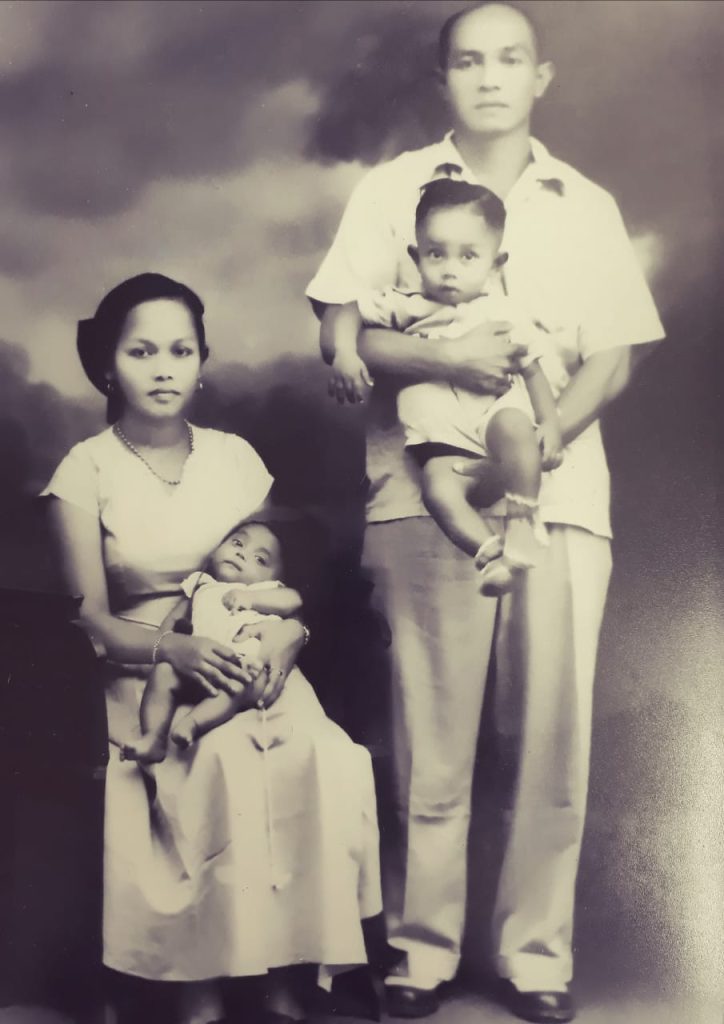
Denny Roeshadi and Romingah carrying their two sons. Photo taken in 1958
1963–2015
The Roeshadi Family
Management of the plantation continued within the Roeshadi family. When Denny Roeshadi passed away in 1982, the company was continued by his two sons, Herry Noegroho and Endro Hermono, under the guidance of their mother, Romingah.
During the following decade, PT Harta Mulia entered a period of prosperity, with abundant harvests of both coffee and cloves. This period of growth continued despite the 1990 eruption of Mount Kelud, which affected the surrounding region.
Romingah passed away in 1998, after which the family’s next generation continued the company’s journey.
Beyond their roles in the family business, Herry and Endro also became active in public life. Herry Noegroho served as Regent of Blitar from 2003, while Endro Hermono served as Deputy Mayor of Blitar from 2005 and currently serves as a member of the Indonesian House of Representatives (DPR-RI).
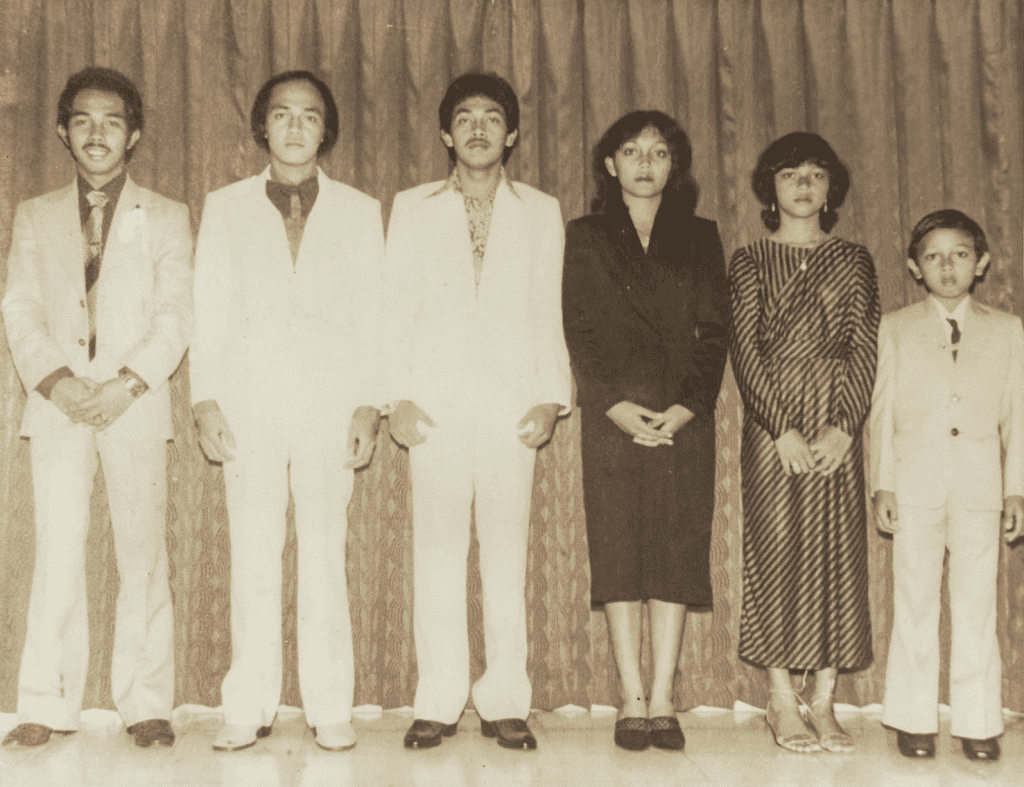
The six Roeshadi children: (from left) Herry Noegroho, Endro Hermono, Reddy Hartadji, Renny Hartawati, Noura Hartaronny, and Utoro Rahmawan. Photo probably taken in 1980.
2015–Present
A New Chapter
Under Wima Brahmantya, De Karanganjar entered a new chapter, focused on opening the plantation to the public and developing its heritage and tourism potential.
With a background as a writer, artist, cultural practitioner, and filmmaker, Wima brought a strong cultural and creative perspective to the development of De Karanganjar. This vision led to the establishment of the museum at De Karanganjar, as well as the development of various cultural festivals and events with an international scope.
The plantation began welcoming visitors in 2016 and was officially introduced as a tourist destination in 2017, marking a new chapter in its long history.

Wima Brahmantya, the eldest son of Herry Noegroho, became the successor to the Roeshadi family business.
The plantation continued. The story evolved.
Today, De Karanganjar remains a place where coffee, history, people and preserved collections meet.
A LIVING PLANTATION
More Than History
More than 150 years after its establishment, De Karanganjar remains a living plantation where coffee, heritage, collections and everyday life continue to meet.
COFFEE
The Plantation
Coffee remains at the heart of De Karanganjar. Robusta is the main variety cultivated here, alongside smaller amounts of Excelsa and Arabica.
ROBUSTA · EXCELSA · ARABICA
VREDESTUIN

A Garden of Memory
Behind the plantation gate lies Vredestuin, where the grave of W. Smith, who died in 1897, remains part of the landscape.
W. SMITH · 1897
MUSEUMS
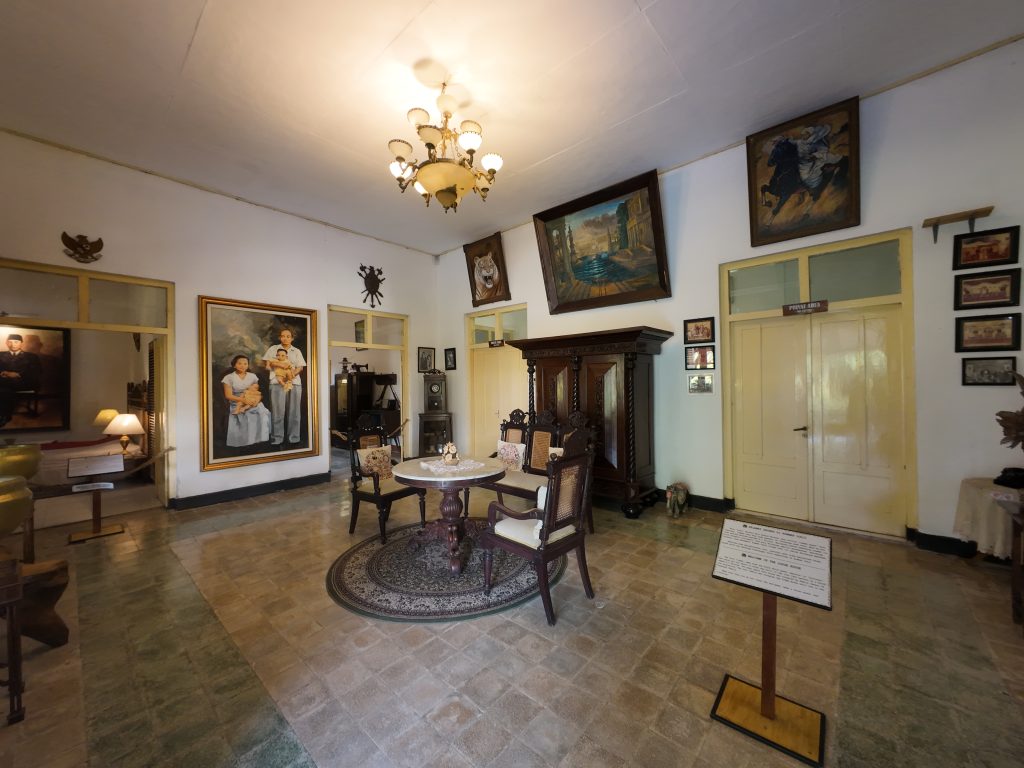
Objects That Remember
The plantation’s historic buildings and collections preserve stories from generations of Karanganjar’s past.
ROEMAH LODJI
OG CAFÉ
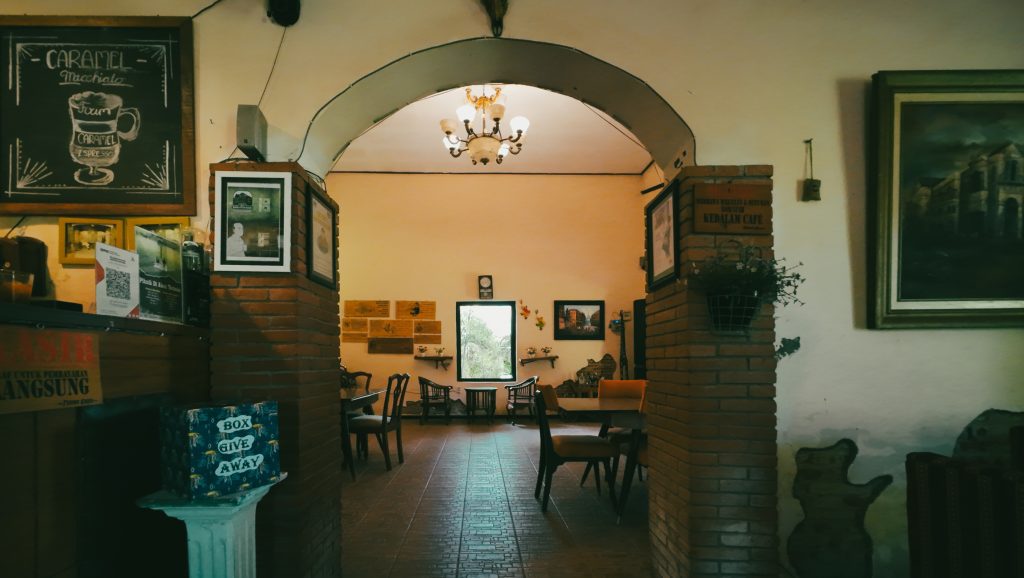
Coffee, Today
Today, visitors can experience coffee within the historic plantation landscape at OG Café.
TUNNEL TELL STORY
"Some stories are preserved in buildings. Others live in the objects left behind."
THE COLLECTIONS
Objects That Keep the Story Alive
History is not only preserved in documents. At De Karanganjar, it can also be found in rooms, collections and objects that have remained connected to the plantation’s story.
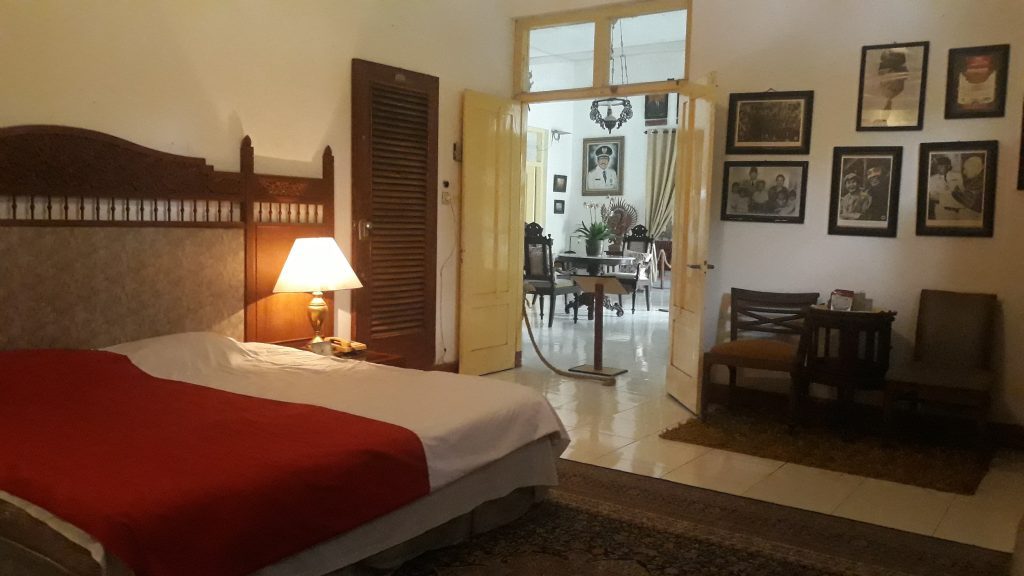
ROOM 806
A Room With a Story
Room 806 is associated with a visit by President Soekarno, who reportedly stayed there during a visit to De Karanganjar in the late 1950s.
LATE 1950s
MUSEUM NOEGROHO
A Family Collection
Museum Noegroho houses a collection of personal belongings associated with the Roeshadi family, including heirlooms and paintings.
HEIRLOOMS · PAINTINGS · FAMILY COLLECTION
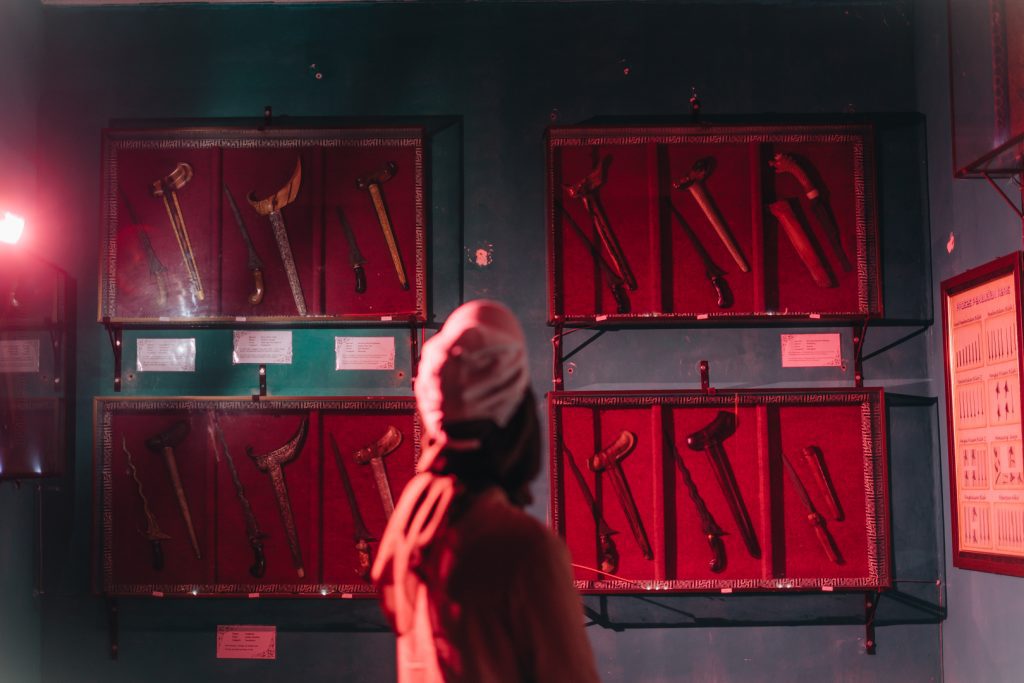
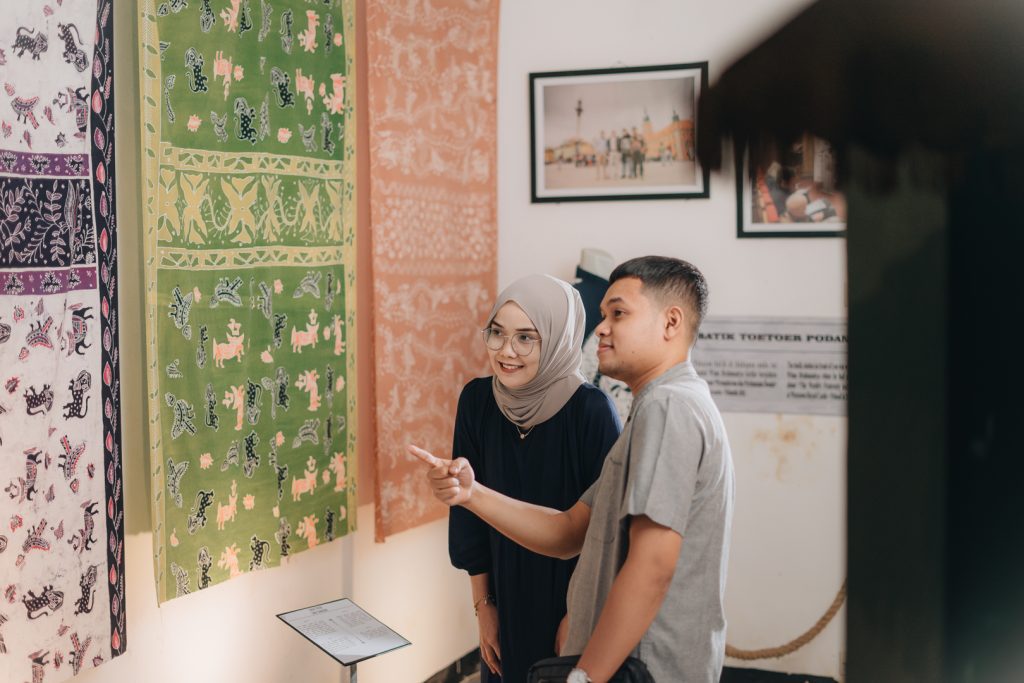
BATIK TUTUR BLITAR
A Story in Pattern
Batik Tutur Blitar is among the collections preserved at Museum Noegroho, adding another layer to the cultural story held within De Karanganjar.
FROM 1874 TO TODAY
A living heritage, still growing.
More than 150 years after its beginnings, De Karanganjar continues to live through its land, coffee, buildings, stories and people. What began in 1874 has evolved through generations, while its connection to coffee and the landscape of Blitar remains at its heart.
Today, De Karanganjar invites a new generation to experience that history not only through its past, but through the place itself.